Join Us
Sign up for new opportunities to take direct action against anti-Asian scapegoating.



Miki Jourdan
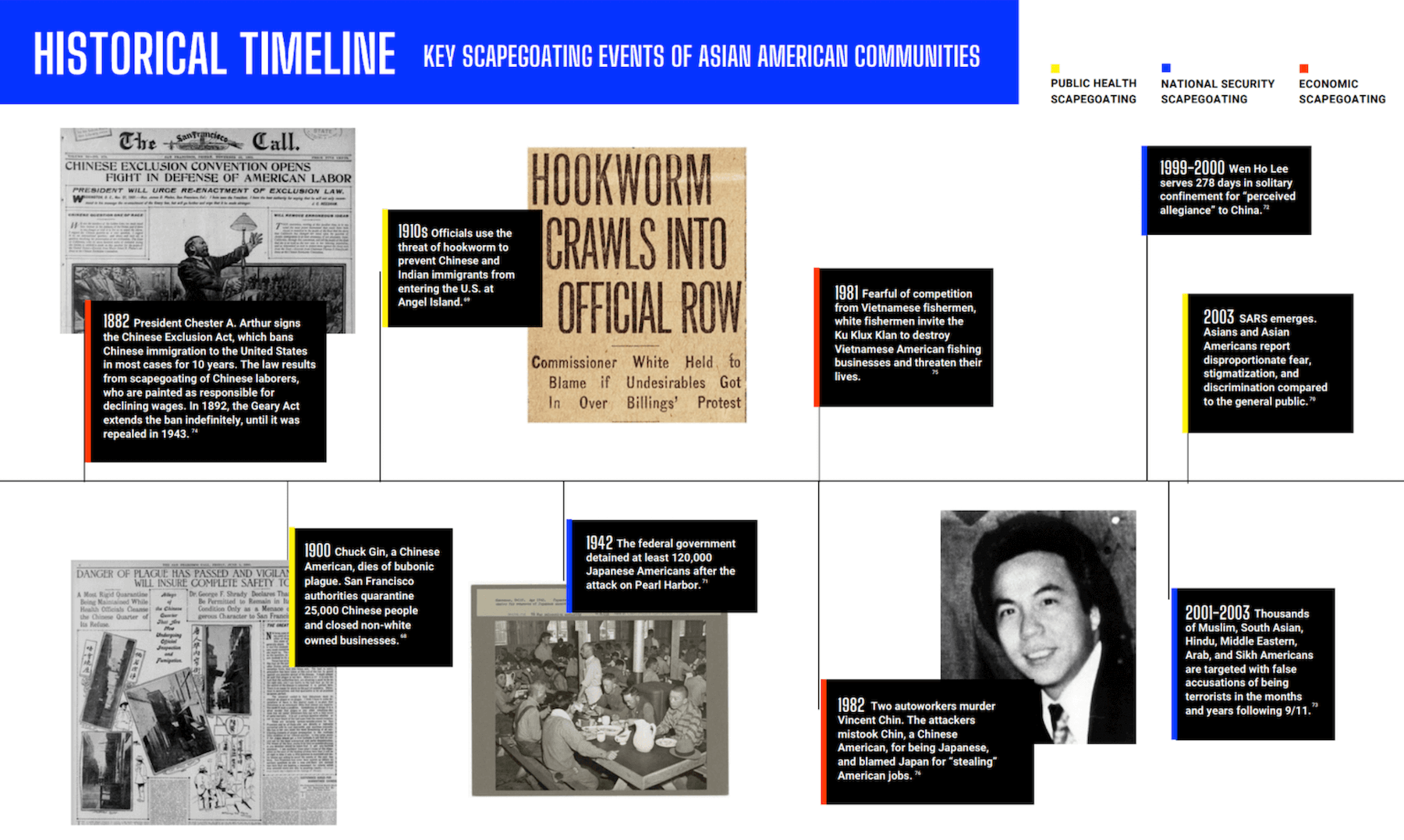
Anti-Asian scapegoating dates back to the earliest chapters of U.S. history — from the Chinese Exclusion Act of 1882, to the Alien Land Laws that swept across states in the 19th and 20th centuries, to Japanese Incarceration during WWII, to the Supreme Court’s 1922 ruling excluding Asian people from U.S. citizenship.
These anti-Asian policies, coupled with anti-Asian political rhetoric, has fueled hate against innocent Asian people for centuries. Multiple Chinatowns were systematically burned down in the 1800s and 1900s. A violent mob attacked, harassed and robbed Chinese residents in Los Angeles in 1871, murdering 19 people in a racial massacre. And amid a backdrop of anti-Japanese political rhetoric in 1982, Chinese American Vincent Chin was brutally beaten to death by two autoworkers in Michigan who mistook him for Japanese and unfairly blamed him for the loss of American jobs. More recently, the events of 9/11 led to increased and widespread discrimination and surveillance of Arab, Middle Eastern, Muslim, and South Asian Americans.
This list of recommendations is a part of the Stop AAPI Hate report: “The Blame Game: How Political Rhetoric Inflames Anti-Asian Scapegoating”. Click here to keep reading.
Throughout the years, these actions have been deemed racist and un-American — and many discriminatory laws and measures were either struck down in courts or repealed by state legislatures across the country. But despite the lessons history has offered, we’re experiencing a resurgence of anti-Asian scapegoating today. Our political leaders are repeating the same mistakes of our past.
As modern-day anti-Asian scapegoating gains traction in U.S. politics today, Asian American communities are in increasing danger. We must take action now to ensure our safety and protect our shared American values of equal rights and opportunity for all.
Sign up for new opportunities to take direct action against anti-Asian scapegoating.